
Shanghai Property Market: Prices, Areas, Investment and Buying
Shanghai is one of China's most important property markets and one of Asia's major international commercial and financial centres. The city combines a historic urban core with global business districts, technology and manufacturing centres, established residential neighbourhoods, extensive suburban development and a large commercial property sector.
For overseas buyers and investors, Shanghai should not be treated as one uniform property market. Conditions can vary considerably between central districts, established residential areas, business centres and newer suburban developments. Transport, employment, schools, amenities, building age, development activity and access to the wider Yangtze River Delta economy all influence the character of individual locations.
This guide examines Shanghai property from an international perspective, covering the city's market, prices, major areas, residential property, investment, development, rental property, foreign ownership and the practical issues overseas buyers need to investigate before purchasing.
Shanghai Property Market
Shanghai has a large and sophisticated property market serving a metropolitan population as well as one of China's most important business economies. Finance, professional services, international trade, manufacturing, technology, education, healthcare and tourism all contribute to demand for different types of property.
The city's position within the Yangtze River Delta is also important. Shanghai is closely connected with major economic centres such as Suzhou, Hangzhou, Ningbo and other cities in the surrounding region. High-speed rail and other transport connections make the wider metropolitan and economic geography relevant to property research.
Shanghai's property market also contains a substantial existing-home sector alongside new development. For overseas researchers, comparing new and second-hand property can provide a more complete picture of the market.
Shanghai Property Prices
Shanghai has been one of the stronger-performing major Chinese residential markets during 2026. According to the National Bureau of Statistics, the price index for newly constructed residential property in Shanghai rose 0.4% between July and August 2026 and was 3.0% higher than in August 2025.
The second-hand residential market also recorded a monthly increase in August 2026. Shanghai's second-hand residential price index rose 0.3% from July, although it remained 0.8% below August 2025. The January-to-August average index was 95.6 compared with the corresponding period of the previous year.
These are market indices rather than prices for individual properties. They are useful for identifying broad movements, but a buyer should examine actual properties, districts, buildings and completed transactions before assessing value.

|
PHILIPPINES |
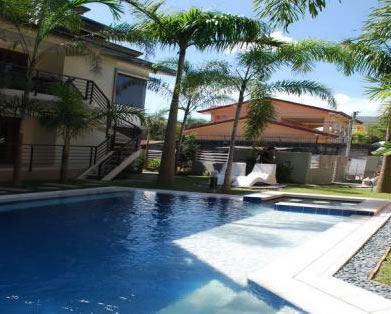
Property Type: Condo
Luxurious apartments, Philippines, this luxury development comprises of 12 units, all finished and ready to move in.
Property Terms: For Sale


|
Let your friends and colleagues know about this property.
|


Central Shanghai Property
Central Shanghai contains some of the city's most established residential and commercial neighbourhoods. Areas around the historic city centre combine older buildings, modern apartments, offices, retail, restaurants, cultural attractions and extensive public transport.
Central property can therefore vary substantially even over short distances. Historic buildings, older apartment developments, renovated properties and modern high-rise residences can occupy the same broad area. Building condition, management, access and permitted use are particularly important when examining an individual property.
Pudong Property Market
Pudong has become one of Shanghai's most recognisable modern business and development areas. Lujiazui is a major financial district, while other parts of Pudong contain residential communities, technology and industrial activity, transport infrastructure and newer urban development.
The district's scale means that Pudong should not be considered a single property market. Central business locations, established residential communities and outer development areas have different relationships with employment, transport and amenities.
For international buyers, Pudong provides a useful example of how Shanghai's property geography combines established urban districts with large-scale modern development.
Huangpu Property Market
Huangpu occupies a central position in Shanghai and includes important historic, commercial, cultural and waterfront areas. Its location places many properties close to established transport, retail, employment and tourism infrastructure.
The district contains a mixture of older and newer property, meaning that building condition and the precise location of an apartment can be more important than a broad district description. Buyers considering older property should investigate renovation, building management, ownership documentation and any restrictions affecting alterations.
Xuhui Property Market
Xuhui is an established Shanghai district with residential neighbourhoods, commercial areas, education, cultural attractions and a substantial stock of mature urban property. Its location and established infrastructure make it an important part of the city's residential market.
Property research in Xuhui should distinguish between different neighbourhoods and building types. Older apartments and houses can have very different characteristics from modern residential developments, while proximity to transport and amenities can influence both owner-occupier and rental demand.
Jing'an Property Market
Jing'an is a central district with a strong combination of business, retail, residential and international activity. Its location provides access to major employment areas and transport connections, while established neighbourhoods sit alongside modern commercial and residential development.
For overseas buyers, Jing'an is particularly relevant when researching centrally located apartments and rental property. As with other central Shanghai districts, however, the characteristics of individual buildings can differ considerably.
Hongqiao and Western Shanghai
Hongqiao is an important western Shanghai transport and business area, with the Hongqiao transportation hub connecting high-speed rail, metro, roads and air travel. The wider area contains offices, exhibition facilities, residential communities and commercial development.
Transport infrastructure is particularly relevant to property research in western Shanghai. Accessibility to major business centres and the wider Yangtze River Delta can influence the practical appeal of properties in different parts of the area.
Shanghai Residential Property
Apartments dominate much of Shanghai's urban residential market. The city contains older apartment buildings, established residential compounds, modern high-rise developments and newer communities on the expanding urban fringe.
When comparing apartments, overseas buyers should examine the building as well as the individual unit. Management quality, common areas, maintenance, parking, elevators, surrounding development, transport and local amenities can all affect the practical suitability of a property.
New and existing properties also require different forms of investigation. A completed second-hand property can be inspected within its established neighbourhood, while a new development requires additional research into the developer, construction progress, completion arrangements and the surrounding development pipeline.
Shanghai New Property and Development
Shanghai continues to have a substantial development pipeline, although China's national property development sector has contracted significantly. National data for January to August 2026 showed real estate development investment down 19.9% year-on-year, with new starts down 24.8%.
The Shanghai market has nevertheless shown stronger residential price performance than many other Chinese cities. This difference between individual city markets is important for international investors because national construction figures do not describe conditions in every metropolitan area.
Development research should consider the specific project, developer, location, construction progress, surrounding supply and expected infrastructure rather than relying solely on national or city-wide statistics.
Shanghai Existing Property Market
Existing residential property is an important part of Shanghai's housing market. National data for 2026 shows second-hand housing transactions becoming increasingly significant across China, while Shanghai's own second-hand price index provides a separate measure of conditions in the resale market.
Existing property can offer overseas buyers the opportunity to examine an established building and neighbourhood before committing to a purchase. It can also provide information about local services, transport, neighbouring development and the practical condition of the property that may not be apparent from a new-development brochure.
Shanghai Property Investment
Shanghai's investment market is closely connected to its role as a major business and financial centre. Employment in finance, professional services, technology, manufacturing, international trade and other sectors supports demand for different forms of commercial and residential property.
Residential investment should be examined in relation to the intended tenant market and specific neighbourhood. Commercial investment requires additional analysis of office, retail, industrial or mixed-use demand, including employment concentrations, transport, operating costs and competing supply.
International investors should also distinguish between buying property for personal use and purchasing property as part of an investment or business activity. The legal requirements can differ depending on the purchaser and intended use.
Shanghai Rental Property
Shanghai has a substantial rental market serving local residents, professionals, students, international companies and other groups. Demand is particularly relevant around major employment centres, universities, transport nodes and established residential areas.
An overseas investor considering rental property should research achievable rents for comparable properties rather than relying on a city-wide average. Building fees, management, maintenance, vacancy, taxation and the legal restrictions applying to the property can all affect the actual rental proposition.
Foreign purchasers should also pay particular attention to permitted use. Shanghai's official guidance for foreign purchasers states that qualifying expatriate buyers may purchase residential property for living purposes and that the property cannot be rented out or used commercially under the stated purchase conditions.
Commercial Property in Shanghai
Shanghai has one of China's largest commercial property markets, including offices, retail, hospitality, industrial property, logistics and mixed-use development. The city's international business role creates particularly important office and commercial concentrations, while its port and manufacturing connections support logistics and industrial activity.
Commercial property should be analysed differently from residential property. Lease terms, tenants, permitted use, operating costs, building management, vacancy and competing supply can be more important than the headline purchase price.
Shanghai Foreign Property Ownership
Foreign property ownership in Shanghai is subject to specific eligibility requirements. Current Shanghai government guidance states that expatriates with Chinese permanent residency or those who have worked in Shanghai for at least one year can qualify to purchase residential property, subject to the applicable conditions.
The guidance states that qualifying foreign purchasers generally need a work contract, must not already own other real estate in China, and must provide continuous social security or individual income tax records for at least one year. The stated rules also limit qualifying expatriates to one residential property for living purposes.
Shanghai has also adjusted its wider residential purchase restrictions. From February 2026, certain non-local Chinese residents became eligible to purchase property under revised social-security, individual-income-tax and residence-permit conditions. These measures concern the wider Shanghai housing market and should not be assumed to remove the separate requirements applying to foreign purchasers.
Because foreign ownership requirements can change, overseas buyers should confirm eligibility and documentation with the relevant Shanghai property authority before entering into a transaction. The wider China foreign property ownership guide provides additional national context.
Buying Property in Shanghai
For an overseas buyer, the first step in buying Shanghai property is establishing eligibility. The purchaser should determine whether the proposed property is available to foreign ownership, whether the intended use is permitted and what documentation is required.
Shanghai's official guidance recommends preliminary qualification review after a suitable property has been identified. For a new property, the developer or agent can assist with the qualification process, while second-hand purchases require documentation from both the buyer and seller, including the existing property ownership certificate.
Registration follows the required contract and tax procedures. Documents in foreign languages may need to be translated into Chinese and notarised. Overseas buyers should obtain professional advice before committing funds and should independently verify the seller, property documentation and transaction arrangements.
Shanghai Property and Infrastructure
Shanghai's extensive metro system, high-speed rail connections, airports, roads and port infrastructure are fundamental to the city's property geography. Transport access can influence the relationship between residential areas and employment centres and can also affect the development potential of peripheral districts.
The Hongqiao transport hub is particularly important because it links Shanghai with other major Yangtze River Delta cities by high-speed rail as well as providing airport and urban transport connections. The wider regional transport network reinforces Shanghai's role as an economic centre rather than an isolated city market.
Shanghai Property Market Data
Official market data provides several useful ways to analyse Shanghai property. The National Bureau of Statistics publishes monthly residential price indices for new and second-hand homes, allowing Shanghai to be compared with other major Chinese cities.
Other data covering construction, new-home sales and existing-home transactions provides additional context. These measures should be considered together because construction activity, new-home sales and second-hand transactions can move at different rates.
For an overseas buyer, actual comparable transactions are generally more useful than relying on a single advertised price or city-wide average. The age, location, floor area, building quality and surrounding infrastructure of an individual property can all produce significant differences in value.
Researching Shanghai Property from Overseas
Shanghai's international profile makes property information relatively accessible online, but online listings remain only the starting point for due diligence. Advertised prices should not automatically be treated as market value, while property descriptions should not be regarded as proof of ownership or foreign-purchase eligibility.
International research should progress from the city to the district, from the district to the neighbourhood and then to the individual property. Buyers should investigate the building, surrounding area, transport, ownership documentation, permitted use and applicable foreign-purchase requirements before considering a transaction.
Shanghai Property Market Outlook
Shanghai's property market is being shaped by the interaction of its strong economic base, residential demand, existing-home transactions, new development, infrastructure and China's wider housing adjustment. Current official data shows Shanghai performing differently from many other major Chinese cities, particularly in the residential price indices.
The market should nevertheless be monitored through several indicators rather than a single price measure. New-home prices, second-hand prices, transaction activity, development, inventory and local economic conditions can provide different signals about the direction of the market.
Shanghai Property Research
Shanghai provides one of China's most important property markets for international buyers, combining global business, finance, technology, manufacturing, education, tourism and a large residential population. Its scale means that the city offers a wide range of property types and locations, but also makes detailed research essential.
For wider research, return to the China cities property markets guide to compare Shanghai with Beijing, Guangzhou, Shenzhen, Chengdu, Chongqing and other major Chinese cities. For national research into ownership, buying, investment, property types, development and the wider market, see the China property guide.
Asia Pacific Property Market Snapshot
| Population | More than 4 billion people live across the broader Asia Pacific region, encompassing East Asia, Southeast Asia, South Asia, Australia, New Zealand and the Pacific island states. The precise geographical definition of Asia Pacific varies between organisations and sources |
|---|---|
| Area | Asia Pacific covers an extensive area stretching from South Asia and the Indian Ocean through East and Southeast Asia to Australia, New Zealand and the Pacific islands. Because regional definitions differ, the total area varies considerably between sources |
| Major Airports | Major international gateways include Singapore Changi, Hong Kong International, Tokyo Haneda and Narita, Seoul Incheon, Bangkok Suvarnabhumi, Kuala Lumpur International, Sydney, Melbourne, Auckland, Beijing Capital and Daxing, Shanghai Pudong, Delhi, Mumbai, Jakarta, Manila, Brisbane, Perth and major airports serving other regional centres |
| Currencies | Asia Pacific uses a wide range of national currencies. Major currencies include the Chinese yuan, Japanese yen, South Korean won, Singapore dollar, Australian dollar, New Zealand dollar, Indian rupee, Indonesian rupiah, Thai baht, Malaysian ringgit, Philippine peso and Vietnamese dong. Currency conditions, exchange-rate arrangements and restrictions on moving funds vary substantially between countries |
| Foreign Ownership | Foreign property ownership varies substantially across Asia Pacific and can differ according to nationality, property type, location, residency status and the structure of the purchase. Some markets provide relatively open access to residential or investment property, while others restrict foreign ownership of land or impose limits on apartments, houses, development land or agricultural property. International buyers should obtain independent local legal advice before purchasing |
| Major Property Markets | Major international property markets include Australia, Japan, Singapore, Hong Kong, China, South Korea, India, Thailand, Malaysia, Indonesia, Vietnam, the Philippines and New Zealand. Sydney, Melbourne, Brisbane, Tokyo, Osaka, Singapore, Hong Kong, Seoul, Bangkok, Kuala Lumpur, Jakarta, Bali, Manila, Ho Chi Minh City, Hanoi, Mumbai and Delhi are among the region's significant urban and investment markets |
| Main Overseas Buyers | International demand comes from a diverse mix of investors, expatriates, entrepreneurs, high-net-worth individuals, retirees, second-home buyers, lifestyle purchasers and people seeking residential property connected with employment, education or relocation. Important sources of overseas demand include neighbouring Asian countries, the Middle East, Europe, North America and Australia and New Zealand, together with substantial intra-regional investment |
| Tourism | Tourism is an important driver of property demand across much of Asia Pacific. Major tourism markets include Thailand, Indonesia, Japan, Australia, New Zealand, Vietnam, Malaysia, the Philippines and the Pacific islands. Beach resorts, tropical islands, cultural destinations, ski areas, major cities, cruise facilities and luxury hospitality developments support demand for hotels, serviced residences, vacation homes, branded residences and short-term rental property |
| Main Luxury Markets | Luxury property markets include Singapore, Hong Kong, Tokyo, Osaka, Sydney, Melbourne, Auckland, Seoul, Bangkok, Phuket, Bali, Jakarta, Kuala Lumpur, Mumbai and selected resort and island destinations across Thailand, Indonesia, Australia, New Zealand and the Pacific. Prime districts, waterfront locations, resort communities, branded residences and high-end new developments form important segments of the regional luxury market |
| Residency Routes | A number of Asia Pacific countries offer residence or migration routes connected with investment, employment, entrepreneurship, retirement, family circumstances or other qualifying criteria. Property ownership may support relocation or investment objectives in some markets, but buying property does not automatically provide residency. Eligibility, investment thresholds and programme conditions vary by country and can change over time |
| Property Taxes | Property taxes, stamp duty, transfer taxes, registration charges, land taxes, municipal charges, rental taxation, capital gains treatment and taxes affecting foreign buyers vary considerably across Asia Pacific. Some markets apply additional transaction taxes or surcharges to foreign purchasers, while others have different rules depending on property type and residency status. Buyers should assess acquisition, ownership, rental and disposal costs before purchasing |
| Investment Opportunities | Asia Pacific offers opportunities across apartments, houses, villas, luxury residences, beachfront property, resort developments, commercial real estate, hospitality, development land, new-build and off-plan projects. Major investment themes include established city markets in Australia, Japan, Singapore and South Korea; rapidly developing markets in Southeast Asia; major Indian cities; tourism destinations such as Thailand, Bali and the Pacific islands; and residential and lifestyle markets across Australia and New Zealand. Pricing, rental demand, infrastructure, taxation, regulation and foreign-buyer access vary considerably between countries and individual locations |
|

