
Property Types in China: A Guide to Chinese Real Estate
China has one of the world's largest and most diverse property markets, but there is no single type of Chinese property. Residential apartments, houses, commercial buildings, offices, retail, industrial property, logistics facilities, tourism developments and development land all operate within different parts of the market.
For an international buyer researching China from overseas, understanding these property types is important before looking at individual properties. The legal structure, location, demand, financing, ownership arrangements, investment characteristics and eventual resale can vary substantially between property categories.
Property type also needs to be considered alongside land use. China's land system distinguishes between land ownership and rights to use land for particular purposes, making it important to understand exactly what a property purchase represents rather than relying on terminology familiar from another country.
Residential Property in China
Residential property is the largest and most familiar part of the Chinese property market for many international buyers. It includes apartments, condominiums, villas, townhouses and other forms of housing.
A large proportion of urban housing is apartment-based, particularly in major metropolitan areas. The market can range from older established residential buildings to large modern developments with extensive communal facilities.
For an overseas buyer, residential property should be divided into several different markets rather than treated as one category. A centrally located apartment in a major city, a suburban family development and a luxury villa in a resort area can have completely different buyers, pricing structures and resale markets.

|
PHILIPPINES |
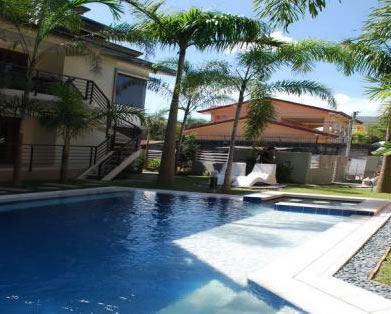
Property Type: Condo
Luxurious apartments, Philippines, this luxury development comprises of 12 units, all finished and ready to move in.
Property Terms: For Sale


|
Let your friends and colleagues know about this property.
|


Apartments and Condominiums
Apartments are particularly important in China's major urban property markets. They can include older resale units, recently completed buildings and new developments sold before completion.
Location is often critical to apartment demand. Access to employment centres, public transport, education, healthcare, shopping and other services can influence both owner-occupier demand and rental demand.
International buyers should also examine the building rather than concentrating only on the apartment. The condition of common areas, management arrangements, maintenance, facilities, parking and the reputation of the development can all affect the ownership experience.
The legal documentation should establish the nature of the property interest, registration status, permitted use and the relevant land-use rights.
Luxury Residential Property
Luxury property forms a separate market within many Chinese cities. It can include large apartments, villas, townhouses and high-end developments in established urban districts or desirable suburban locations.
The luxury market is generally more dependent on the depth of the local high-income buyer pool than the mainstream housing market. International buyers should therefore investigate who actually purchases and occupies comparable properties rather than assuming that a prestigious address automatically provides strong resale liquidity.
Luxury properties can also have higher maintenance, management and furnishing costs. A comparison based only on the purchase price can therefore give an incomplete picture of the cost of ownership.
Houses, Villas and Townhouses
Detached houses, villas and townhouses are available in selected Chinese markets, although they represent a much smaller part of the urban housing landscape than apartments.
These properties can be found in suburban communities, luxury developments and tourism-oriented locations. Their value may depend heavily on access, land availability, development quality and the characteristics of the surrounding neighbourhood.
Buyers should pay particular attention to the legal nature of the property and the underlying land-use arrangements. The fact that a property appears to have a private garden or substantial land area does not mean that the buyer is acquiring land ownership in the same form as a freehold house in another country.
New-Build Residential Property
New-build housing is an important part of China's property market and can offer buyers a choice of unit size, floor level, layout and development facilities.
Buying a new property requires investigation of the developer and the project as well as the individual unit. Construction progress, project approvals, delivery arrangements, registration and the developer's ability to complete the project should all be considered.
Marketing material can provide useful information about a development, but it should not replace independent verification. Proposed transport links, commercial facilities, schools and other infrastructure should be distinguished from facilities that already exist.
International buyers researching new developments should also understand the difference between buying a completed registered property and entering into a contract for a property that is still under construction.
Existing and Resale Homes
Existing homes provide an alternative to purchasing directly from a developer. The buyer can normally inspect the completed property, the building and the surrounding neighbourhood before committing to the purchase.
Resale property requires careful investigation of title and registration, the seller's authority to sell, outstanding obligations, mortgages or other encumbrances and the physical condition of the property.
Existing properties can also provide a better basis for comparing actual neighbourhood prices because there may be a larger pool of completed properties against which the proposed purchase can be assessed.
Commercial Property
Commercial property covers a broad range of real estate, including shops, retail centres, restaurants, mixed-use buildings, commercial units and other properties intended for business activity.
Commercial property should not be evaluated using the same criteria as a residential home. The important questions include permitted use, location, customer or tenant demand, accessibility, surrounding businesses, operating costs and competing supply.
For an investor, the quality and security of the rental income may be more important than the appearance of the building. Lease terms, tenant strength, vacancy and future competition should therefore form part of the research.
Office Property
Office property is concentrated around China's major business centres and regional economic hubs. Buildings range from older office stock to modern high-rise business developments.
Office demand can be strongly linked to employment, business formation, corporate investment and the structure of the local economy. A building in a major business district therefore needs to be assessed against its competing office supply rather than against the wider residential property market.
For an international investor, factors such as floor efficiency, building management, transport connections, tenant profile, lease structure and vacancy can be more significant than the headline purchase price.
Retail Property
Retail property includes shops, shopping centres, retail units and mixed-use developments containing commercial space.
Retail value is closely connected to the surrounding population, pedestrian and vehicle access, transport, competing shopping areas and the strength of local consumer demand.
A retail unit that appears inexpensive can still be difficult to let if the location lacks sufficient customer traffic. International buyers should investigate actual trading conditions and surrounding development before treating rental projections as reliable.
Industrial Property
Industrial property occupies a very different part of the market from residential real estate. It includes factories, production facilities, industrial buildings and sites associated with manufacturing and related activities.
Industrial demand tends to follow the economic structure of a region. Manufacturing clusters, transport infrastructure, ports, labour availability and access to major markets can all influence the suitability of a location.
Permitted use is particularly important. An industrial property cannot automatically be converted to residential, retail or another use simply because the alternative use appears commercially attractive.
Logistics and Warehousing Property
Logistics and warehousing have become important property categories in areas connected to manufacturing, distribution, ports, airports and major population centres.
These properties should be assessed according to their transport connections and operational characteristics rather than simply by comparing building prices.
Access to highways, rail, ports and airports can be fundamental to demand. Building specifications, loading facilities, storage configuration, site access and permitted use can also influence the value of a logistics property.
Mixed-Use Property
Mixed-use developments combine different forms of property within one project or building. Residential apartments may sit above retail, offices or hospitality facilities, creating a more complex property environment.
Mixed-use projects can provide convenience and diversified activity, but buyers need to understand exactly which part of the development they are purchasing.
Management arrangements, service charges, permitted uses, access and the relationship between residential and commercial areas should be investigated before purchase.
Tourism and Resort Property
China's major cities are not the only markets of interest to property buyers. Tourism destinations and resort areas create another group of property markets, including hotels, serviced accommodation, holiday developments and residential property associated with tourism.
Tourism property should be assessed against the underlying visitor economy. Seasonality, transport access, competing accommodation, local development and the distinction between permanent residents and short-term visitors can all influence demand.
An international buyer should be particularly careful with claims about guaranteed rental income or tourism investment returns. The performance of the underlying destination is more important than the presentation of a particular development.
Hotels and Hospitality Property
Hotels and hospitality assets are commercial investments rather than simply large residential properties. Their performance depends on occupancy, room rates, operating costs, management and the strength of the destination.
A buyer considering a hotel or hospitality project should establish whether the investment is an operating business, a property investment, or a combination of the two.
Management contracts, franchise arrangements, operating licences, refurbishment requirements and competition from other accommodation should all be investigated.
Development Property
Development property includes land and existing properties acquired with the intention of redevelopment or construction. It is one of the most complex areas of the Chinese property market.
The buyer needs to understand the permitted land use, planning requirements, development obligations, remaining land-use term and approvals required for the proposed project.
China's urban real estate system provides for land-use rights for defined purposes and periods. Residential, commercial, industrial, logistics and other land uses can therefore have different characteristics and permitted uses.
Development property should not be approached simply as a larger version of buying a home. It requires specialist legal, planning, financial and development due diligence.
Land and Land-Use Rights
Land requires particular care for international buyers because China's system differs from freehold land ownership systems used in some other countries.
Urban land is state-owned, while land in rural and suburban areas can be collectively owned subject to the constitutional and statutory framework. Property transactions can therefore involve ownership of buildings together with rights to use the underlying land rather than private ownership of the land itself.
The intended land use and the term of the relevant land-use right are important characteristics of a property. A buyer should establish these details from the official documentation rather than assuming them from an agent's description.
Industrial and Commercial Land
Industrial and commercial land can look attractive to investors because of its development potential, but the permitted use is fundamental to its value.
Chinese land-use classifications distinguish between categories such as residential, industrial, logistics and commercial uses. The applicable land-use arrangements can influence what can legally be constructed and operated on a site.
Changing an approved use can require additional permissions and may not be possible in every case. Development land should therefore be assessed according to its legally permitted use rather than the buyer's preferred future use.
Property for Rental Investment
Almost any residential or commercial property can appear attractive when presented with a projected rental yield, but rental investment should be considered as a separate property strategy.
Residential rental property depends on the depth and stability of the local tenant market. Commercial rental property depends on businesses, consumers and economic activity. Industrial and logistics property depends on production and distribution requirements.
The right property type therefore depends on the underlying source of demand. A high advertised yield does not compensate for weak tenant demand, high vacancy or poor resale liquidity.
Property for International Buyers
International buyers should not assume that every property advertised for sale in China is available to them on the same basis as a domestic purchaser.
Eligibility and restrictions can depend on the buyer's circumstances, the property type, its intended use and the location. Foreign investment structures can also be different from an individual purchase of residential property.
This makes property type an important part of the initial eligibility assessment. Before selecting a property, establish whether the intended acquisition is legally available to the buyer and whether the proposed use is permitted.
See the IPD guide to foreign property ownership in China for the wider ownership framework.
How Property Type Affects Value
The same location can contain several different property markets with very different values. A residential apartment, office, retail unit and warehouse should not be compared simply because they occupy the same district.
Each property type has its own sources of demand, operating costs, permitted uses, financing characteristics and potential buyers. Understanding those differences is essential when comparing prices.
For international buyers, the most useful comparison is generally between genuinely comparable properties rather than between different asset classes.
Property Type and Resale
Resale should be considered before purchasing any property type. The eventual buyer for a residential apartment may be an owner-occupier, investor or another eligible purchaser. A specialised commercial or industrial property may have a much smaller pool of potential buyers.
Liquidity can therefore vary considerably between asset classes and locations. A property with a large theoretical market value is not necessarily easy to sell quickly.
Understanding who is likely to buy the property in the future is an important part of assessing its suitability today.
Choosing a Chinese Property Type
The correct property type depends on the purpose of the purchase. Someone looking for a home has different requirements from an investor seeking rental income, a company seeking premises or a developer looking for a development opportunity.
The process should therefore begin with the intended use, followed by location and market research, eligibility, property selection and due diligence.
For international buyers, the key is to understand the complete property structure: what is being purchased, what it can legally be used for, what rights accompany the property, who is likely to demand it in the future and what restrictions apply to the buyer.
Research China Property by Market and Property Type
China's property market becomes easier to understand when it is divided into meaningful categories. Residential apartments, houses, luxury property, commercial buildings, offices, retail, industrial, logistics, hospitality and development property each require a different research approach.
For an international buyer, property type should never be separated from location, land use and ownership structure. A detailed understanding of those relationships provides a much stronger foundation for comparing individual properties and deciding which part of China's property market is relevant to the intended purchase.
Asia Pacific Property Market Snapshot
| Population | More than 4 billion people live across the broader Asia Pacific region, encompassing East Asia, Southeast Asia, South Asia, Australia, New Zealand and the Pacific island states. The precise geographical definition of Asia Pacific varies between organisations and sources |
|---|---|
| Area | Asia Pacific covers an extensive area stretching from South Asia and the Indian Ocean through East and Southeast Asia to Australia, New Zealand and the Pacific islands. Because regional definitions differ, the total area varies considerably between sources |
| Major Airports | Major international gateways include Singapore Changi, Hong Kong International, Tokyo Haneda and Narita, Seoul Incheon, Bangkok Suvarnabhumi, Kuala Lumpur International, Sydney, Melbourne, Auckland, Beijing Capital and Daxing, Shanghai Pudong, Delhi, Mumbai, Jakarta, Manila, Brisbane, Perth and major airports serving other regional centres |
| Currencies | Asia Pacific uses a wide range of national currencies. Major currencies include the Chinese yuan, Japanese yen, South Korean won, Singapore dollar, Australian dollar, New Zealand dollar, Indian rupee, Indonesian rupiah, Thai baht, Malaysian ringgit, Philippine peso and Vietnamese dong. Currency conditions, exchange-rate arrangements and restrictions on moving funds vary substantially between countries |
| Foreign Ownership | Foreign property ownership varies substantially across Asia Pacific and can differ according to nationality, property type, location, residency status and the structure of the purchase. Some markets provide relatively open access to residential or investment property, while others restrict foreign ownership of land or impose limits on apartments, houses, development land or agricultural property. International buyers should obtain independent local legal advice before purchasing |
| Major Property Markets | Major international property markets include Australia, Japan, Singapore, Hong Kong, China, South Korea, India, Thailand, Malaysia, Indonesia, Vietnam, the Philippines and New Zealand. Sydney, Melbourne, Brisbane, Tokyo, Osaka, Singapore, Hong Kong, Seoul, Bangkok, Kuala Lumpur, Jakarta, Bali, Manila, Ho Chi Minh City, Hanoi, Mumbai and Delhi are among the region's significant urban and investment markets |
| Main Overseas Buyers | International demand comes from a diverse mix of investors, expatriates, entrepreneurs, high-net-worth individuals, retirees, second-home buyers, lifestyle purchasers and people seeking residential property connected with employment, education or relocation. Important sources of overseas demand include neighbouring Asian countries, the Middle East, Europe, North America and Australia and New Zealand, together with substantial intra-regional investment |
| Tourism | Tourism is an important driver of property demand across much of Asia Pacific. Major tourism markets include Thailand, Indonesia, Japan, Australia, New Zealand, Vietnam, Malaysia, the Philippines and the Pacific islands. Beach resorts, tropical islands, cultural destinations, ski areas, major cities, cruise facilities and luxury hospitality developments support demand for hotels, serviced residences, vacation homes, branded residences and short-term rental property |
| Main Luxury Markets | Luxury property markets include Singapore, Hong Kong, Tokyo, Osaka, Sydney, Melbourne, Auckland, Seoul, Bangkok, Phuket, Bali, Jakarta, Kuala Lumpur, Mumbai and selected resort and island destinations across Thailand, Indonesia, Australia, New Zealand and the Pacific. Prime districts, waterfront locations, resort communities, branded residences and high-end new developments form important segments of the regional luxury market |
| Residency Routes | A number of Asia Pacific countries offer residence or migration routes connected with investment, employment, entrepreneurship, retirement, family circumstances or other qualifying criteria. Property ownership may support relocation or investment objectives in some markets, but buying property does not automatically provide residency. Eligibility, investment thresholds and programme conditions vary by country and can change over time |
| Property Taxes | Property taxes, stamp duty, transfer taxes, registration charges, land taxes, municipal charges, rental taxation, capital gains treatment and taxes affecting foreign buyers vary considerably across Asia Pacific. Some markets apply additional transaction taxes or surcharges to foreign purchasers, while others have different rules depending on property type and residency status. Buyers should assess acquisition, ownership, rental and disposal costs before purchasing |
| Investment Opportunities | Asia Pacific offers opportunities across apartments, houses, villas, luxury residences, beachfront property, resort developments, commercial real estate, hospitality, development land, new-build and off-plan projects. Major investment themes include established city markets in Australia, Japan, Singapore and South Korea; rapidly developing markets in Southeast Asia; major Indian cities; tourism destinations such as Thailand, Bali and the Pacific islands; and residential and lifestyle markets across Australia and New Zealand. Pricing, rental demand, infrastructure, taxation, regulation and foreign-buyer access vary considerably between countries and individual locations |
|

