
Shenzhen Property Market: Housing, Investment and Market Trends
Shenzhen is one of China's most distinctive property markets. The city developed from a relatively small settlement into a major technology, manufacturing, financial and business centre, and its position beside Hong Kong gives it an important role in the wider Greater Bay Area economy.
For an international buyer researching Shenzhen from outside China, the city should not be viewed as one uniform housing market. Futian, Nanshan, Luohu, Bao'an, Longgang, Longhua, Guangming, Pingshan, Yantian and Dapeng have different economic functions, transport connections, development histories and residential markets.
The useful approach is therefore to understand Shenzhen's economic geography first, then compare districts and neighbourhoods before researching individual properties.
Shenzhen Property Market Structure
Shenzhen is a highly urbanised city with a property market closely connected to employment, technology, manufacturing, trade and cross-border business. Unlike an established city whose residential geography developed over centuries, Shenzhen has experienced rapid planned expansion and redevelopment.
This has produced a mixture of established urban neighbourhoods, high-rise residential developments, major new districts, business centres, technology campuses and suburban communities. Property values can therefore change substantially between locations that appear relatively close on a map.
Transport is another major component of the market. Metro connections, major roads, railway stations, ports and links toward Hong Kong and other Greater Bay Area cities influence where people live and work.
Nanshan Property Market
Nanshan is one of Shenzhen's most important economic and residential districts. It contains major technology and business areas, including Shenzhen's established technology cluster, universities, corporate headquarters and the Qianhai area.
The district has a particularly strong connection with Shenzhen's technology economy. Employment generated by technology companies, research, finance and professional services contributes to residential demand, while the district's proximity to the western side of central Shenzhen and transport connections gives it a wider metropolitan role.
Nanshan contains several distinct residential markets. Established neighbourhoods around Shekou, Houhai and other developed areas differ from newer projects associated with Qianhai and the expanding western business districts.
For an investor, the important question is therefore not simply whether Nanshan is a high-value market, but which employment and tenant markets a particular property serves.

|
PHILIPPINES |
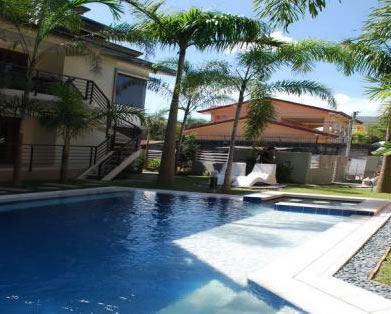
Property Type: Condo
Luxurious apartments, Philippines, this luxury development comprises of 12 units, all finished and ready to move in.
Property Terms: For Sale


|
Let your friends and colleagues know about this property.
|


Futian Property Market
Futian forms the modern administrative and financial core of Shenzhen. It contains the Civic Center, major financial and corporate offices, transport connections and the central business district surrounding landmarks such as the Ping An International Finance Center.
Its economic importance has a direct relationship with the residential market. Futian's compact geography and concentration of employment create demand for housing within convenient commuting distance of major business areas.
The district also faces Hong Kong across the boundary to the south and connects with Luohu and Nanshan on either side. This makes transport and accessibility particularly important when assessing individual residential locations.
Futian's economic base is substantial. In 2025, the district recorded regional GDP of approximately 642 billion yuan, with finance and other business services forming important components of the local economy.
Luohu and the Established Shenzhen Market
Luohu is one of Shenzhen's older urban districts and has a particularly important relationship with Hong Kong. The Luohu border crossing and railway connections have historically made the district an important gateway between the two cities.
Its residential market includes established housing, redevelopment areas and properties close to mature commercial and transport infrastructure. The district therefore provides a useful contrast with newer development areas elsewhere in Shenzhen.
For property research, established districts such as Luohu require close attention to building age and condition. Older apartments can vary substantially in quality, management and layout, while redevelopment can change the character of particular neighbourhoods.
Qianhai and Western Shenzhen
Qianhai is one of the most significant areas to research when examining Shenzhen's future economic geography. It has been developed as a major modern service and business district, with links to finance, professional services, technology and the wider Greater Bay Area.
Its property market needs to be considered in relation to the wider Nanshan and Bao'an areas. New commercial development, transport infrastructure and planned urban growth can influence residential demand, but buyers should distinguish completed infrastructure from projects that remain under development.
For an overseas investor, Qianhai is therefore a location where development research and property research overlap. A potential purchase should be assessed against the actual employment, transport and residential environment rather than relying entirely on long-term development projections.
Bao'an Property Market
Bao'an has become one of Shenzhen's major economic and residential districts. It combines manufacturing and technology activity, established communities, major infrastructure and newer commercial and residential development.
The district's location on the western side of Shenzhen gives it an important connection to Shenzhen Bao'an International Airport, the western part of the Greater Bay Area and major transport routes.
Bao'an is also large enough to contain several different property markets. The area around Bao'an Central District has a different profile from communities farther north, while airport-related and industrial locations have their own employment and housing characteristics.
For buyers comparing Shenzhen districts, Bao'an should therefore be evaluated at neighbourhood level rather than treated simply as a lower-cost alternative to central districts.
Longgang and Longhua Property Markets
Longgang and Longhua are important residential and economic areas north and northeast of the central urban districts. Both contain substantial established housing and newer development, while their transport connections provide access to Shenzhen's main employment centres.
Longgang has a large economic base and a significant manufacturing and technology presence. Longhua has developed rapidly as a residential and transport-connected urban district, with important links to northern Shenzhen and the city's railway network.
These districts demonstrate why Shenzhen property research needs to consider commuting patterns. A property farther from the traditional centre may still serve a strong employment market if transport connections make the journey practical.
Guangming and Pingshan Development Markets
Guangming and Pingshan are among the areas where Shenzhen's expansion and development geography is particularly visible. Both have substantial space for planned development compared with the established central districts.
Guangming has developed around advanced manufacturing, science and technology and major transport infrastructure. Pingshan has also developed an important industrial and technology base and contains newer residential communities.
These markets can provide a different research proposition from established central Shenzhen. The potential of an individual property may depend more heavily on future employment, transport and infrastructure than it would in a mature central neighbourhood.
Yantian and Dapeng Property Markets
Yantian occupies a coastal position in eastern Shenzhen and is strongly associated with the port, coastal environment and established residential communities. Property research here can involve a different balance between employment, transport, lifestyle and coastal location.
Dapeng is more peripheral and has a stronger connection with coastal and recreational environments. It should not be compared directly with the central business districts because its property demand is influenced by different geographical and lifestyle factors.
These differences are important for international buyers considering Shenzhen as both a residential and investment market. The city contains locations serving business demand as well as areas where the physical environment itself is a more important part of the property proposition.
Shenzhen Property Prices
Shenzhen has historically been one of China's highest-value residential markets, but citywide price figures conceal substantial differences between districts and property types.
Official Shenzhen statistics publish historical secondary-market transaction prices by district, demonstrating the long-standing differences between areas such as Futian, Nanshan, Luohu, Bao'an and Longgang. Current price research should use the latest district and transaction evidence rather than relying on historical averages.
New-build and second-hand property should also be separated. A new development can command a premium because of its age, facilities, design, location or developer positioning, while an established apartment may provide a different combination of size, neighbourhood and resale evidence.
For wider national context, see China property prices.
Shenzhen New-Build Property Market
New residential development remains important in Shenzhen, particularly in districts where urban expansion and redevelopment are continuing. New projects can introduce modern apartments, commercial facilities and planned community infrastructure.
However, a new-build purchase requires more than comparing the advertised price with nearby properties. Buyers should investigate the developer, construction status, completion arrangements, management, surrounding development, transport and comparable resale properties.
New supply can also change the balance of a neighbourhood. A location with several large projects under construction may face greater competition between properties than an established area where new residential supply is limited.
Shenzhen Existing and Resale Property
Existing property is particularly useful for market research because the buyer can assess the completed building and neighbourhood rather than relying on plans for future development.
Building age, renovation, management, floor position, views, parking, transport access and the quality of surrounding facilities can all affect the value of an established apartment.
Resale transactions also provide a useful benchmark for new developments. If a newly built property is priced substantially above established alternatives, the buyer should identify the characteristics that justify the difference rather than assuming that new construction automatically represents better value.
Shenzhen Rental Property Market
Shenzhen's large technology, manufacturing, financial and business economy supports a substantial rental market. Demand can come from technology employees, professionals, business workers, students, families and people relocating to the city.
Rental demand differs between districts. A property near a major technology or financial employment cluster may serve a different tenant market from one in a suburban residential community.
International investors should establish achievable local rent rather than applying a citywide rental average. Vacancy, furnishing, management, maintenance, taxes and purchase costs should be included when calculating a potential rental return.
See the China rental market guide for wider context.
Technology, Business and Property Demand
Shenzhen's property market is closely connected to its role as a technology and business centre. The city is home to major technology companies, advanced manufacturing, financial services, research institutions and a large network of smaller businesses.
This economic structure matters because employment creates housing demand. Locations close to major employment clusters can attract residents who value shorter commutes, while improved transport can allow residential markets to expand farther from central employment areas.
For an overseas buyer, researching the economic activity around a property can therefore be more informative than looking at population figures alone. The question is not simply how many people live in an area, but what brings them there and whether those economic drivers are likely to continue supporting housing demand.
Shenzhen and the Greater Bay Area
Shenzhen's property market cannot be fully understood without considering its relationship with the wider Guangdong-Hong Kong-Macao Greater Bay Area. Hong Kong lies immediately to the south, while Guangzhou, Dongguan and other major urban centres form part of the wider economic network.
This regional geography creates cross-city business, employment, manufacturing, logistics and investment relationships. Transport infrastructure can therefore affect property demand beyond the immediate boundaries of Shenzhen.
For property research, this means that a location should sometimes be assessed according to its access to the wider regional economy rather than only its distance from central Shenzhen.
Shenzhen Property Market and Investment Research
Shenzhen property can be considered for owner occupation, long-term rental, business-related residence and other investment strategies. Each requires different research.
A rental investor should examine tenant demand, achievable rent, vacancy and operating expenses. An owner-occupier may place greater emphasis on transport, schools, neighbourhood character and proximity to work. A buyer considering a new development needs additional information about the developer and completion of the project.
The city itself is not the investment proposition. The proposition is the combination of property, location, price, intended use, costs, ownership conditions and the economic factors supporting demand.
Shenzhen Housing Policy and Market Conditions
Shenzhen has adjusted housing policies in response to changing market conditions. In September 2025, the city relaxed purchase restrictions in several non-core districts, while restrictions remained more significant in Futian, Nanshan and parts of Bao'an. Yantian and Dapeng received broader relaxation under those measures.
Policy changes also included measures affecting mortgage conditions and housing demand. The details demonstrate why current purchase rules should be checked before making a decision based on older market information.
These local rules primarily concern the eligibility of domestic and non-local Chinese buyers. International purchasers need to research the separate framework governing foreign ownership, eligibility, registration, taxation and foreign-exchange procedures.
See foreign ownership of property in China before treating a Shenzhen property as an available purchase.
Shenzhen Property Market Data
Shenzhen should be monitored using several market indicators rather than a single price statistic. Useful information includes new-home prices, second-hand prices, transaction volumes, construction, completions, inventory, rental conditions and mortgage activity.
Transaction data is particularly useful because advertised prices do not necessarily represent completed sales. District-level data can also reveal changes that are hidden by a citywide average.
Economic data should be considered alongside property statistics. Shenzhen's first-quarter 2026 GDP was reported at approximately 959 billion yuan, up 5.8 percent year on year, while Nanshan, Futian, Longgang and Bao'an remained among the city's largest district economies. Such data helps explain the employment geography supporting different residential markets.
Researching Shenzhen Property From Overseas
An international buyer should begin by identifying the purpose of the purchase and then examining Shenzhen's districts according to the employment, transport and lifestyle characteristics that matter to that purpose.
The research can then move from district to neighbourhood, from neighbourhood to property type and finally to individual properties. New-build and established housing should be compared separately, while rental investments require local evidence of achievable rent and tenant demand.
Before committing to a property, the buyer should also investigate ownership eligibility, title and registration, taxes, transaction costs, payment arrangements and the practical management of the property from overseas.
The China property buying guide provides the wider purchase process.
Understanding the Shenzhen Property Market
Shenzhen is best understood as a collection of property markets linked by a powerful metropolitan economy rather than as one uniform citywide market. Nanshan and Futian have strong connections to technology, finance and corporate employment, Luohu has an established urban and cross-border role, Bao'an combines residential growth with technology, manufacturing and transport, while Longgang, Longhua, Guangming, Pingshan, Yantian and Dapeng have their own economic and geographical characteristics.
Current market statistics can show changes in prices, sales and development, but they become much more useful when connected to the reasons people live and work in particular areas.
For an international buyer researching Shenzhen from overseas, the most useful sequence is therefore market first, district second, neighbourhood third and property last. That approach provides a much stronger basis for comparing individual properties within one of China's most varied urban property markets.
Asia Pacific Property Market Snapshot
| Population | More than 4 billion people live across the broader Asia Pacific region, encompassing East Asia, Southeast Asia, South Asia, Australia, New Zealand and the Pacific island states. The precise geographical definition of Asia Pacific varies between organisations and sources |
|---|---|
| Area | Asia Pacific covers an extensive area stretching from South Asia and the Indian Ocean through East and Southeast Asia to Australia, New Zealand and the Pacific islands. Because regional definitions differ, the total area varies considerably between sources |
| Major Airports | Major international gateways include Singapore Changi, Hong Kong International, Tokyo Haneda and Narita, Seoul Incheon, Bangkok Suvarnabhumi, Kuala Lumpur International, Sydney, Melbourne, Auckland, Beijing Capital and Daxing, Shanghai Pudong, Delhi, Mumbai, Jakarta, Manila, Brisbane, Perth and major airports serving other regional centres |
| Currencies | Asia Pacific uses a wide range of national currencies. Major currencies include the Chinese yuan, Japanese yen, South Korean won, Singapore dollar, Australian dollar, New Zealand dollar, Indian rupee, Indonesian rupiah, Thai baht, Malaysian ringgit, Philippine peso and Vietnamese dong. Currency conditions, exchange-rate arrangements and restrictions on moving funds vary substantially between countries |
| Foreign Ownership | Foreign property ownership varies substantially across Asia Pacific and can differ according to nationality, property type, location, residency status and the structure of the purchase. Some markets provide relatively open access to residential or investment property, while others restrict foreign ownership of land or impose limits on apartments, houses, development land or agricultural property. International buyers should obtain independent local legal advice before purchasing |
| Major Property Markets | Major international property markets include Australia, Japan, Singapore, Hong Kong, China, South Korea, India, Thailand, Malaysia, Indonesia, Vietnam, the Philippines and New Zealand. Sydney, Melbourne, Brisbane, Tokyo, Osaka, Singapore, Hong Kong, Seoul, Bangkok, Kuala Lumpur, Jakarta, Bali, Manila, Ho Chi Minh City, Hanoi, Mumbai and Delhi are among the region's significant urban and investment markets |
| Main Overseas Buyers | International demand comes from a diverse mix of investors, expatriates, entrepreneurs, high-net-worth individuals, retirees, second-home buyers, lifestyle purchasers and people seeking residential property connected with employment, education or relocation. Important sources of overseas demand include neighbouring Asian countries, the Middle East, Europe, North America and Australia and New Zealand, together with substantial intra-regional investment |
| Tourism | Tourism is an important driver of property demand across much of Asia Pacific. Major tourism markets include Thailand, Indonesia, Japan, Australia, New Zealand, Vietnam, Malaysia, the Philippines and the Pacific islands. Beach resorts, tropical islands, cultural destinations, ski areas, major cities, cruise facilities and luxury hospitality developments support demand for hotels, serviced residences, vacation homes, branded residences and short-term rental property |
| Main Luxury Markets | Luxury property markets include Singapore, Hong Kong, Tokyo, Osaka, Sydney, Melbourne, Auckland, Seoul, Bangkok, Phuket, Bali, Jakarta, Kuala Lumpur, Mumbai and selected resort and island destinations across Thailand, Indonesia, Australia, New Zealand and the Pacific. Prime districts, waterfront locations, resort communities, branded residences and high-end new developments form important segments of the regional luxury market |
| Residency Routes | A number of Asia Pacific countries offer residence or migration routes connected with investment, employment, entrepreneurship, retirement, family circumstances or other qualifying criteria. Property ownership may support relocation or investment objectives in some markets, but buying property does not automatically provide residency. Eligibility, investment thresholds and programme conditions vary by country and can change over time |
| Property Taxes | Property taxes, stamp duty, transfer taxes, registration charges, land taxes, municipal charges, rental taxation, capital gains treatment and taxes affecting foreign buyers vary considerably across Asia Pacific. Some markets apply additional transaction taxes or surcharges to foreign purchasers, while others have different rules depending on property type and residency status. Buyers should assess acquisition, ownership, rental and disposal costs before purchasing |
| Investment Opportunities | Asia Pacific offers opportunities across apartments, houses, villas, luxury residences, beachfront property, resort developments, commercial real estate, hospitality, development land, new-build and off-plan projects. Major investment themes include established city markets in Australia, Japan, Singapore and South Korea; rapidly developing markets in Southeast Asia; major Indian cities; tourism destinations such as Thailand, Bali and the Pacific islands; and residential and lifestyle markets across Australia and New Zealand. Pricing, rental demand, infrastructure, taxation, regulation and foreign-buyer access vary considerably between countries and individual locations |
|

