
Typhoon and Cyclone Risk in Asia-Pacific – Guide for International Property Buyers
Typhoon and cyclone risk is an important consideration for international buyers researching property across Asia-Pacific. The region includes major cities, coastal communities, island markets, resort destinations and rapidly developing areas that can experience tropical cyclones and associated hazards. For an overseas buyer, the issue is not simply whether a country experiences typhoons or cyclones, but how the specific location and property may be affected and how well the building, infrastructure and insurance arrangements manage that exposure.
The terminology varies across the region. Tropical cyclones are commonly described as typhoons in parts of East and Southeast Asia and as cyclones in other parts of the Indian Ocean and South Pacific. The underlying weather system is broadly the same, although the characteristics, frequency and seasonal patterns differ between locations.
For a buyer purchasing from abroad, physical risk should form part of normal property due diligence. Location, elevation, construction, drainage, storm protection, insurance, access and property management can all influence the practical consequences of a severe storm.
Why Typhoon and Cyclone Risk Matters to Property Buyers
A tropical cyclone can affect property through high winds, heavy rainfall, storm surge, flooding, falling trees or debris and damage to electricity, water, transport and communications infrastructure. Coastal and island properties may face several of these hazards at the same time.
The financial consequences can extend beyond visible building damage. A property may become temporarily uninhabitable, rental income can be interrupted, repairs may take time and access to contractors or building materials may be restricted following a major event. Owners living overseas may face additional challenges because they cannot easily inspect the property or coordinate emergency work themselves.
For a permanent home, the principal concern may be safety, resilience and the ability to continue living in the property. For a holiday home or rental investment, disruption to tourism, tenant demand and local infrastructure can also affect income. For development land, the suitability of the site and the cost of designing for local environmental conditions become important before construction begins.
Typhoon exposure should therefore be considered alongside the wider Asia-Pacific property risks framework rather than treated as a standalone weather issue.
Where Typhoon Risk Occurs Across Asia-Pacific
Typhoon and cyclone exposure varies substantially across Asia-Pacific. The western North Pacific is one of the world's most active tropical cyclone regions, affecting countries and territories including Japan, the Philippines, Taiwan and parts of China and Southeast Asia. Other areas of Southeast Asia can experience tropical storms and cyclones, while Australia and parts of the South Pacific have their own cyclone seasons and exposure.
The level of risk can vary significantly within a single country. Coastal areas may face stronger wind and storm-surge exposure than inland locations, while mountainous terrain can alter rainfall patterns and create additional landslide risks. Large cities may have extensive infrastructure and emergency systems, but dense development can also create substantial exposure where drainage, transport or utilities are disrupted.
Island property requires particular attention because a severe storm can affect a relatively large proportion of a local economy and infrastructure network at the same time. Roads, airports, ports, electricity supplies, communications and water systems can all be important to the practical usability of a property after a major event.
International buyers should therefore avoid using a national label as a substitute for local research. A country described as exposed to typhoons may contain locations with very different levels of risk because of latitude, coastline, elevation, building standards, infrastructure and local geography.

|
PHILIPPINES |
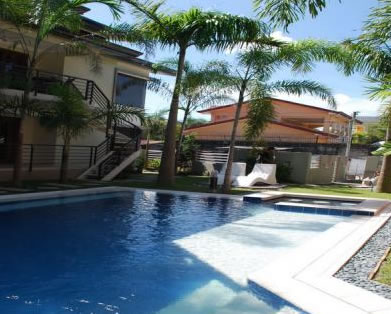
Property Type: Condo
Luxurious apartments, Philippines, this luxury development comprises of 12 units, all finished and ready to move in.
Property Terms: For Sale


|
Let your friends and colleagues know about this property.
|


Typhoon Exposure and the Property Location
The precise location of a property is one of the most important factors in assessing storm exposure. A beachfront villa, a high-rise apartment several kilometres inland and a hillside house may all be in the same city but face different combinations of wind, flooding, storm surge and access risks.
Coastal properties deserve particular attention because tropical cyclones can produce storm surge and exceptionally heavy rainfall in addition to high winds. Low-lying land may be exposed to flooding, while coastal roads and infrastructure may become inaccessible even where the property itself suffers relatively little structural damage.
Elevation can therefore be relevant, but it should not be treated as a guarantee of safety. A property on higher ground may avoid some flooding while being more exposed to wind or rainfall runoff. Hillside locations can also introduce landslide or drainage considerations.
Buyers should investigate local hazard maps, historical storm information and available government or municipal information where these resources exist. The purpose is to understand the characteristics of the site rather than simply assign a general risk category to the country.
Where coastal exposure is significant, the assessment should also include coastal flooding and property risk. Flooding can be caused by several different mechanisms, and a property may face more than one type of exposure.
Building Design and Construction
The ability of a property to withstand a severe tropical cyclone depends partly on how it was designed and constructed. Roof structures, windows, doors, external walls, drainage, foundations and connections between structural components can all influence resilience to high winds and heavy rainfall.
Building standards vary between countries and may also have changed over time. A newer property may have been designed under more recent requirements, while an older building may have been constructed under different standards. However, age alone does not establish whether a property is safe or vulnerable.
International buyers should investigate the property's construction history, approvals, maintenance and any previous storm damage. Particular attention may be appropriate for roofs, balconies, glazing, external fixtures, drainage systems and alterations that were made after the original construction.
For apartments and condominiums, the investigation should extend beyond the individual unit. Common roofs, windows, external walls, lifts, generators, parking areas, drainage and other shared facilities can affect the building's resilience and the owner's potential repair obligations.
For detached houses and villas, buyers should consider the entire site, including landscaping, trees, retaining structures, drainage and access roads. A well-built house can still become difficult to occupy if the surrounding infrastructure is severely disrupted.
Where the property represents a substantial investment, an independent building inspection can help identify construction or maintenance issues. A standard property inspection should not automatically be regarded as a specialist assessment of cyclone resilience.
Flooding, Storm Surge and Secondary Hazards
Wind is only one component of tropical cyclone risk. Heavy rainfall can produce flash flooding, river flooding and drainage problems, while coastal locations can be affected by storm surge. These hazards can occur simultaneously and may compound one another.
International buyers should establish whether the property lies near the coast, a river, drainage channel or other area where water may accumulate during extreme rainfall. The local road network is also important because a property can become effectively isolated if surrounding roads flood or are damaged.
Landscaping and site drainage deserve attention during property inspections. Poor drainage may create recurring problems even without a major cyclone, while intense rainfall can reveal weaknesses that are not obvious during normal weather conditions.
Hillside properties require additional care because intense rainfall can destabilise slopes, overwhelm drainage systems or contribute to landslides. The risk may therefore extend beyond the property boundary to neighbouring land and access routes.
These issues demonstrate why climate and physical risk should be assessed at property level. IPD's wider Asia-Pacific climate risk guide provides a broader framework for considering environmental conditions alongside property ownership.
Buying Coastal and Island Property
Coastal and island properties are particularly attractive to many international buyers because of beaches, climate, tourism and lifestyle opportunities. These same geographical characteristics can increase exposure to tropical storms and related hazards.
A beachfront property should therefore be assessed on more than its view, access to the sea or potential rental income. Buyers should investigate elevation, coastal exposure, drainage, erosion, storm surge, access roads and the availability of utilities. The surrounding infrastructure may be just as important as the building itself.
Island markets can also have limited construction capacity. After a major storm, demand for builders, engineers, materials and equipment can increase rapidly while transport links may be disrupted. This can lengthen repair times and increase costs for owners.
For overseas owners, local property management can become particularly valuable. A capable manager may be able to arrange storm preparation, inspect the property after an event, coordinate emergency repairs and communicate with insurers while the owner is abroad.
Buyers considering resort property should also distinguish between the resilience of the individual unit and the wider resort. Shared facilities, roads, landscaping, pools, power systems, seawalls and other infrastructure may be essential to the operation and value of the development.
Typhoon Insurance and Property Ownership Costs
Insurance is an important part of managing tropical cyclone risk, but international buyers should not assume that a standard property policy provides unlimited protection against every storm-related loss. Coverage, exclusions, deductibles and limits vary between countries, insurers, property types and policies.
Before purchasing, buyers should establish what is covered in relation to wind damage, flooding, storm surge, water damage, contents, temporary accommodation and other associated losses. Flood and storm-surge coverage may be treated differently from wind damage, making the exact policy wording particularly important for coastal property.
Apartment owners should also establish what insurance is maintained by the building or owners' association and where responsibility passes to the individual owner. A building-wide policy may not cover all contents, improvements or losses associated with an individual unit.
Insurance availability itself can become a factor in property affordability. Premiums may be higher in exposed locations, deductibles may be significant and some risks may be difficult to insure. Buyers should obtain realistic insurance information before completing the purchase rather than assuming that suitable cover will be available afterwards.
Insurance should be viewed as one part of a wider risk-management strategy. It cannot prevent physical damage, eliminate disruption or compensate for every potential loss. See the IPD guide to property insurance in Asia-Pacific for related ownership considerations.
Typhoon Risk and Rental Property
Storm exposure can affect rental property in several ways. A severe event may temporarily remove a property from the rental market, reduce tourism demand, damage common facilities or disrupt local services. In a tourism-dependent location, the impact can extend beyond individual buildings to the destination as a whole.
International investors should therefore avoid assessing a coastal or resort property solely by its advertised rental yield. The financial model should allow for maintenance, insurance, property management, vacancy and the possibility of periods when the property cannot be occupied.
Properties aimed at long-term residents may have different demand characteristics from holiday accommodation. A city with a diversified economy may recover differently from a small resort market where tourism is the dominant source of demand.
Property management is particularly important for overseas owners. The ability to secure the property before a storm, inspect it afterwards and arrange repairs can materially affect the practical cost of ownership.
The eventual resale market should also be considered. Prospective buyers may ask about previous storm damage, insurance claims, repairs and the property's exposure. Clear documentation can make future due diligence easier, although it cannot guarantee a particular resale price.
New-Build and Off-Plan Property in Cyclone Areas
New construction can provide opportunities to incorporate current building practices and storm-resilient design, but an off-plan purchase requires a different form of due diligence. The buyer may be committing funds before the completed building can be inspected.
International buyers should investigate the developer's experience, planning and construction approvals, project specifications and the standards applicable to the development. Marketing descriptions of a project as high quality or resilient should be supported by appropriate documentation.
For larger developments, buyers should also understand how shared infrastructure is designed and maintained. Roads, drainage, power systems, water supplies, landscaping and coastal protection can all influence the resilience of the development.
Buyers should understand what happens if the project is delayed, specifications change or construction does not proceed as originally described. These issues are particularly important where a development is located in a physically exposed coastal or island environment.
IPD's guides to off-plan property and property developer risk provide additional context for international buyers considering development exposure.
Typhoon Due Diligence for Overseas Buyers
For a buyer based outside Asia-Pacific, researching tropical cyclone risk should be a structured part of the purchase process. The objective is not to predict when a storm will occur, but to understand the property's exposure and the financial and practical consequences if a severe event takes place.
Start with the exact location rather than the country alone. Establish the local storm history, coastal and flood exposure, elevation, drainage and infrastructure. Then investigate the individual building, including construction, maintenance, previous damage and any relevant inspection or engineering documentation.
Insurance should be checked before committing to the purchase, including the cost of cover and the deductibles and exclusions that could apply. Overseas owners should also establish how the property will be inspected and managed during and after severe weather.
A useful due diligence checklist includes:
• Is the property located in an area with significant tropical cyclone or typhoon exposure?
• What is known about local wind, rainfall, flooding and storm-surge hazards?
• Is the property exposed because of its coastline, elevation, slope or surrounding geography?
• What building standards applied when the property was constructed?
• Has the property experienced previous storm damage, and are repair records available?
• Are the roof, windows, drainage, external structures and other vulnerable elements in good condition?
• What insurance is available, and what exclusions, limits and deductibles apply?
• What insurance and maintenance arrangements apply to shared areas in an apartment or resort development?
• Who will inspect and manage the property if the owner is overseas when a storm occurs?
• Could severe weather interrupt rental income or affect the property's eventual resale market?
Where important information is unavailable or contradictory, further investigation may be appropriate before the buyer becomes contractually committed or transfers substantial funds.
Researching Typhoon and Cyclone Risk Across Asia-Pacific
Typhoon and cyclone exposure should not automatically rule out a property market. Many locations affected by tropical storms have established construction practices, emergency systems, insurance markets and property industries that have developed around these conditions. The important question for an international buyer is how the specific property and location manage the risks involved.
The strongest assessment combines geographical research, local hazard information, building inspection, insurance advice and a realistic ownership budget. Coastal and island property can offer compelling lifestyle and investment opportunities, but the physical environment needs to be considered alongside price, rental demand, taxation, ownership rules and exit liquidity.
IPD provides a wider framework for researching Asia-Pacific property markets, allowing international buyers to move from regional geography to country, location and property-specific research. Understanding typhoon and cyclone exposure is one part of that process and should ultimately be assessed together with the building, its surroundings and the wider market in which it sits.
Asia Pacific Property Market Snapshot
| Population | More than 4 billion people live across the broader Asia Pacific region, encompassing East Asia, Southeast Asia, South Asia, Australia, New Zealand and the Pacific island states. The precise geographical definition of Asia Pacific varies between organisations and sources |
|---|---|
| Area | Asia Pacific covers an extensive area stretching from South Asia and the Indian Ocean through East and Southeast Asia to Australia, New Zealand and the Pacific islands. Because regional definitions differ, the total area varies considerably between sources |
| Major Airports | Major international gateways include Singapore Changi, Hong Kong International, Tokyo Haneda and Narita, Seoul Incheon, Bangkok Suvarnabhumi, Kuala Lumpur International, Sydney, Melbourne, Auckland, Beijing Capital and Daxing, Shanghai Pudong, Delhi, Mumbai, Jakarta, Manila, Brisbane, Perth and major airports serving other regional centres |
| Currencies | Asia Pacific uses a wide range of national currencies. Major currencies include the Chinese yuan, Japanese yen, South Korean won, Singapore dollar, Australian dollar, New Zealand dollar, Indian rupee, Indonesian rupiah, Thai baht, Malaysian ringgit, Philippine peso and Vietnamese dong. Currency conditions, exchange-rate arrangements and restrictions on moving funds vary substantially between countries |
| Foreign Ownership | Foreign property ownership varies substantially across Asia Pacific and can differ according to nationality, property type, location, residency status and the structure of the purchase. Some markets provide relatively open access to residential or investment property, while others restrict foreign ownership of land or impose limits on apartments, houses, development land or agricultural property. International buyers should obtain independent local legal advice before purchasing |
| Major Property Markets | Major international property markets include Australia, Japan, Singapore, Hong Kong, China, South Korea, India, Thailand, Malaysia, Indonesia, Vietnam, the Philippines and New Zealand. Sydney, Melbourne, Brisbane, Tokyo, Osaka, Singapore, Hong Kong, Seoul, Bangkok, Kuala Lumpur, Jakarta, Bali, Manila, Ho Chi Minh City, Hanoi, Mumbai and Delhi are among the region's significant urban and investment markets |
| Main Overseas Buyers | International demand comes from a diverse mix of investors, expatriates, entrepreneurs, high-net-worth individuals, retirees, second-home buyers, lifestyle purchasers and people seeking residential property connected with employment, education or relocation. Important sources of overseas demand include neighbouring Asian countries, the Middle East, Europe, North America and Australia and New Zealand, together with substantial intra-regional investment |
| Tourism | Tourism is an important driver of property demand across much of Asia Pacific. Major tourism markets include Thailand, Indonesia, Japan, Australia, New Zealand, Vietnam, Malaysia, the Philippines and the Pacific islands. Beach resorts, tropical islands, cultural destinations, ski areas, major cities, cruise facilities and luxury hospitality developments support demand for hotels, serviced residences, vacation homes, branded residences and short-term rental property |
| Main Luxury Markets | Luxury property markets include Singapore, Hong Kong, Tokyo, Osaka, Sydney, Melbourne, Auckland, Seoul, Bangkok, Phuket, Bali, Jakarta, Kuala Lumpur, Mumbai and selected resort and island destinations across Thailand, Indonesia, Australia, New Zealand and the Pacific. Prime districts, waterfront locations, resort communities, branded residences and high-end new developments form important segments of the regional luxury market |
| Residency Routes | A number of Asia Pacific countries offer residence or migration routes connected with investment, employment, entrepreneurship, retirement, family circumstances or other qualifying criteria. Property ownership may support relocation or investment objectives in some markets, but buying property does not automatically provide residency. Eligibility, investment thresholds and programme conditions vary by country and can change over time |
| Property Taxes | Property taxes, stamp duty, transfer taxes, registration charges, land taxes, municipal charges, rental taxation, capital gains treatment and taxes affecting foreign buyers vary considerably across Asia Pacific. Some markets apply additional transaction taxes or surcharges to foreign purchasers, while others have different rules depending on property type and residency status. Buyers should assess acquisition, ownership, rental and disposal costs before purchasing |
| Investment Opportunities | Asia Pacific offers opportunities across apartments, houses, villas, luxury residences, beachfront property, resort developments, commercial real estate, hospitality, development land, new-build and off-plan projects. Major investment themes include established city markets in Australia, Japan, Singapore and South Korea; rapidly developing markets in Southeast Asia; major Indian cities; tourism destinations such as Thailand, Bali and the Pacific islands; and residential and lifestyle markets across Australia and New Zealand. Pricing, rental demand, infrastructure, taxation, regulation and foreign-buyer access vary considerably between countries and individual locations |
Major Asia Pacific Countries That Appeal to International Investors and Buyers:
Southeast Asia
 Cambodia Properties Growing urban and coastal markets attracting international buyers and investors.  Indonesia Properties Bali, Jakarta and other destinations offer apartments, villas and tourism-linked property opportunities.  Malaysia Properties Kuala Lumpur, Penang and other established markets attract international buyers and investors.  Philippines Properties Manila, Cebu and resort destinations offer apartments, condos and lifestyle property.  Singapore Properties A major international real estate centre with prime residential and investment markets.  Thailand Properties Bangkok, Phuket, Pattaya and other destinations attract substantial international property interest.  Vietnam Properties Major cities and coastal destinations offer growing opportunities for overseas buyers. East Asia
 China Properties Major metropolitan and coastal property markets with significant international connections.  Japan Properties Tokyo, Osaka, Kyoto and resort markets attract international residential investors.  South Korea Properties Seoul, Busan and other major markets offer urban and lifestyle property opportunities.  Taiwan Properties Taipei and other established markets offer apartments and residential investment opportunities. South Asia
 India Properties Mumbai, Delhi, Goa and other major markets attract overseas buyers and investors.  Maldives Properties Luxury resorts, islands and beachfront property create a distinctive international market.  Sri Lanka Properties Coastal, resort and city properties attract overseas buyers seeking lifestyle opportunities. Oceania & Pacific
 Australia Properties Sydney, Melbourne, Brisbane and major coastal markets have a long-established international profile.  Fiji Properties Beachfront and resort property provide a focused international lifestyle market.  New Zealand Properties Auckland, Wellington and lifestyle markets attract overseas buyers within regulated ownership rules. Territories
 Hong Kong Properties International property market and financial centre with a highly developed urban real estate sector. Territory.  Macau Properties Highly developed urban and resort property market with strong international connections. Territory. |
|

