
Japan Foreign Property Ownership: Rules, Reporting and Buying
Japan is an established international property market in which overseas buyers can acquire real estate, but ownership should not be confused with the right to live or work in Japan. For an international buyer researching Japan from overseas, the important questions are not simply whether a foreigner can buy property, but what can be purchased, how the acquisition is structured, what reporting is required, how the land and building are treated, and what restrictions or obligations may apply after completion.
Japan's property market also needs to be considered regionally. A Tokyo apartment, a Kyoto house, a ski property in Hokkaido, a resort property in Okinawa and rural land can have very different ownership, management, financing and resale considerations. Foreign ownership research therefore works best when it is combined with the relevant Japan property markets and property-type research.
Can Foreigners Own Property in Japan?
Foreign nationals can generally purchase and own real estate in Japan. Ownership is not limited to Japanese citizens simply because the purchaser lives overseas. The practical distinction is between owning property and having immigration rights: purchasing a house, apartment, land or other real estate does not itself provide a Japanese visa or residence status.
This distinction is particularly important for overseas buyers considering a second home or investment property. A purchaser may own Japanese property while continuing to live outside Japan, but the ownership arrangement, management of the property and any intended use should be planned separately from immigration matters.
Foreign buyers should also distinguish individual ownership from ownership through a Japanese or overseas company. The appropriate structure depends on the purpose of the acquisition, financing, taxation, succession arrangements and intended use of the property. These are areas where legal and tax advice should be obtained before a transaction is committed.
What Property Can Foreign Buyers Purchase?
The range of Japanese real estate available to overseas purchasers is broad. Residential property includes condominiums, detached houses, traditional houses, second homes and newly built homes. Investors may also investigate rental apartments, commercial property, hotels, development sites and other income-producing assets.
Land ownership is also an important part of the Japanese property system. A buyer considering a house should therefore establish exactly what is being acquired: the building, the underlying land, a leasehold interest or another form of property right. Condominium ownership can similarly involve ownership of the individual unit together with an interest in common areas and the underlying land.
These distinctions matter when comparing Japanese property with markets in other countries. The word “property” can conceal materially different rights, obligations and management arrangements.

|
PHILIPPINES |
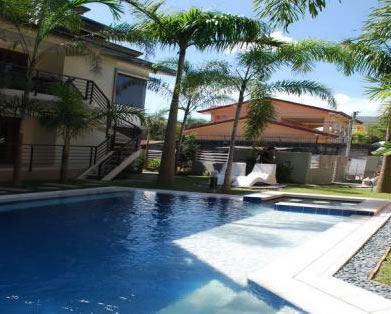
Property Type: Condo
Luxurious apartments, Philippines, this luxury development comprises of 12 units, all finished and ready to move in.
Property Terms: For Sale


|
Let your friends and colleagues know about this property.
|


Non-Resident Property Ownership and Reporting
One of the most important issues for an overseas buyer is the reporting requirement under Japan's Foreign Exchange and Foreign Trade Act. The Ministry of Finance states that a non-resident acquiring real property in Japan or rights relating to it may be required to submit a post-transaction report through the Bank of Japan to the Minister of Finance within 20 days of the acquisition.
The rules were amended with effect from April 1, 2026, so older explanations of the reporting system should not automatically be relied upon. The Ministry of Finance has also identified specific exemptions depending on the purpose and circumstances of the acquisition. The detailed requirements therefore need to be checked against the date and structure of the proposed transaction.
The report can be submitted by the non-resident purchaser or by an agent resident in Japan. The Ministry of Finance notes that the report is prepared in Japanese, making a Japan-based professional or agent particularly useful for an overseas purchaser unfamiliar with the administrative process.
This reporting requirement should not be interpreted as a general prohibition on foreign ownership. It is a regulatory reporting system associated with certain non-resident acquisitions.
Land Ownership and Large-Scale Transactions
Japan also has a separate system governing certain large-scale land transactions. Under the National Land Use Planning Act, transactions above specified land-area thresholds can require notification to the relevant authorities. The thresholds differ according to whether the land is inside an urbanisation area, another designated urban planning area or outside an urban planning area.
For example, the general post-transaction thresholds are 2,000 square metres or more in designated urbanisation areas, 5,000 square metres or more in other urban planning areas and 10,000 square metres or more outside urban planning areas. The purchaser is responsible for the relevant notification procedure when the statutory conditions are met.
This system is particularly relevant to larger land acquisitions and development projects rather than a typical condominium purchase. International buyers considering development land, large rural holdings or substantial investment acquisitions should therefore investigate the applicable land-use rules before proceeding.
Foreign Ownership of Land in Japan
Foreign ownership should not be assessed solely by looking at whether a purchaser is Japanese or foreign. Location and intended land use can be equally important. Land may be subject to planning, development, environmental, agricultural, forestry or other restrictions that affect what the owner can actually do with it.
A useful example is agricultural land. Owning a parcel does not necessarily mean that it can be freely converted into a residential or commercial development site. Rural property can therefore require substantially more investigation than an urban apartment.
The same principle applies to properties in areas with particular environmental, tourism, infrastructure or development considerations. An overseas purchaser should establish the permitted use of the property rather than assuming that ownership automatically provides unrestricted development rights.
Foreign Buyers and Large Land Acquisitions
Japan has introduced additional visibility around large land transactions involving foreign individuals and foreign corporations. In September 2026, the Ministry of Land, Infrastructure, Transport and Tourism published figures for July through December 2025 showing 68 notifications involving foreign individuals or foreign corporations among 9,573 notifications covered by the large-scale land transaction reporting system.
These figures should be interpreted carefully. They do not represent all foreign property purchases in Japan. The system covers land transactions above statutory area thresholds, so a small apartment, ordinary house or other transaction below those thresholds is outside this particular dataset.
The distinction is important when researching claims about foreign ownership. Statistics relating to large-scale land transactions should not be treated as a measure of the entire foreign residential property market.
Buying a Condominium as a Foreign Owner
Japanese condominiums can be attractive to international buyers because the purchase is usually more straightforward to understand than a large development site. However, the buyer should examine both the individual unit and the condominium's management arrangements.
Documents relating to the management association, management fees, reserve funds, building rules, planned repairs and restrictions on use can materially affect the economics of ownership. A buyer considering rental use should establish whether the building's rules permit the intended arrangement rather than assuming that an apartment can automatically be used as a rental property.
Older buildings also require particular attention to maintenance and future capital expenditure. The purchase price alone does not describe the long-term cost of ownership.
Buying a House or Land
Detached houses require a different research process. The condition and age of the building, access to the property, utilities, road rights, planning status and condition of the underlying land can all influence value and usability.
Japan also has a substantial stock of older and vacant houses. An overseas purchaser looking for a traditional house or lower-cost property should therefore investigate why the property is available at its particular price and what expenditure would be required after purchase.
For land purchases, the most important question may be what can legally and practically be built or operated on the site. Zoning, permitted uses, access, infrastructure and development permissions should be established before treating a land purchase as a development opportunity.
Foreign Ownership and Property Investment
Foreign ownership of Japanese property can involve several different investment strategies. An overseas buyer may be seeking a home, second home, long-term rental property, commercial investment, hotel or tourism-related asset, redevelopment opportunity or land for a future project.
These strategies should not be grouped together simply because the purchaser is foreign. A residential investment in Tokyo has different drivers from a holiday property in Hokkaido, while a commercial acquisition involves different due diligence from a traditional house purchased for personal use.
Japan's major metropolitan markets have also attracted significant real estate investment. The Bank of Japan has reported continuing property-price and rental-market developments in major metropolitan areas, while higher construction costs and labour shortages are important considerations for development and redevelopment projects.
For investors, the relevant research therefore extends beyond ownership rules to Japan property investment, rental demand, financing, operating costs, property management and eventual resale.
Does Buying Property Give the Buyer Residency?
Property ownership and Japanese immigration status are separate matters. Buying an apartment, house or other real estate does not by itself grant a foreign purchaser the right to live permanently in Japan.
This is one of the most important points for overseas buyers researching Japanese property. Someone considering a Japanese property as a second home needs to research the immigration rules applicable to their intended stays, while an investor living overseas needs to consider how the property will be managed without assuming that ownership creates a residence entitlement.
The property decision should therefore be made alongside, rather than instead of, research into the buyer's personal immigration and tax circumstances.
Research Before Buying Japanese Property From Overseas
International buyers should build their research around the actual property rather than relying on a general statement that foreigners can buy in Japan. The process should establish the property's legal ownership structure, land and building rights, permitted use, physical condition, management arrangements and all purchase and ongoing costs.
For an overseas purchaser, practical questions include who will inspect the property, who will manage it after completion, how documents will be translated, how funds will be transferred, how taxes and other obligations will be handled, and what happens if the property is eventually sold.
It is also useful to compare actual transactions rather than relying entirely on asking prices. Japan's Ministry of Land, Infrastructure, Transport and Tourism provides a Real Estate Information Library containing transaction-price information, allowing buyers to investigate market evidence alongside properties currently offered for sale.
Japan Foreign Ownership: A Research-Based Approach
Foreign ownership of Japanese real estate is best understood as a property research issue rather than simply a nationality question. Overseas purchasers can investigate residential, investment and commercial opportunities, but the obligations attached to the purchase depend on the property, the buyer's residency status, the transaction structure, the location and the intended use.
For someone researching Japan from overseas, the sensible sequence is to identify the market and property type first, establish the ownership and use conditions, investigate the transaction and reporting requirements, calculate the full cost of ownership and then obtain professional advice before committing to the purchase.
That approach allows foreign buyers to distinguish the ability to own Japanese property from the separate questions of residence, development rights, taxation, financing, management and investment performance.
Asia Pacific Property Market Snapshot
| Population | More than 4 billion people live across the broader Asia Pacific region, encompassing East Asia, Southeast Asia, South Asia, Australia, New Zealand and the Pacific island states. The precise geographical definition of Asia Pacific varies between organisations and sources |
|---|---|
| Area | Asia Pacific covers an extensive area stretching from South Asia and the Indian Ocean through East and Southeast Asia to Australia, New Zealand and the Pacific islands. Because regional definitions differ, the total area varies considerably between sources |
| Major Airports | Major international gateways include Singapore Changi, Hong Kong International, Tokyo Haneda and Narita, Seoul Incheon, Bangkok Suvarnabhumi, Kuala Lumpur International, Sydney, Melbourne, Auckland, Beijing Capital and Daxing, Shanghai Pudong, Delhi, Mumbai, Jakarta, Manila, Brisbane, Perth and major airports serving other regional centres |
| Currencies | Asia Pacific uses a wide range of national currencies. Major currencies include the Chinese yuan, Japanese yen, South Korean won, Singapore dollar, Australian dollar, New Zealand dollar, Indian rupee, Indonesian rupiah, Thai baht, Malaysian ringgit, Philippine peso and Vietnamese dong. Currency conditions, exchange-rate arrangements and restrictions on moving funds vary substantially between countries |
| Foreign Ownership | Foreign property ownership varies substantially across Asia Pacific and can differ according to nationality, property type, location, residency status and the structure of the purchase. Some markets provide relatively open access to residential or investment property, while others restrict foreign ownership of land or impose limits on apartments, houses, development land or agricultural property. International buyers should obtain independent local legal advice before purchasing |
| Major Property Markets | Major international property markets include Australia, Japan, Singapore, Hong Kong, China, South Korea, India, Thailand, Malaysia, Indonesia, Vietnam, the Philippines and New Zealand. Sydney, Melbourne, Brisbane, Tokyo, Osaka, Singapore, Hong Kong, Seoul, Bangkok, Kuala Lumpur, Jakarta, Bali, Manila, Ho Chi Minh City, Hanoi, Mumbai and Delhi are among the region's significant urban and investment markets |
| Main Overseas Buyers | International demand comes from a diverse mix of investors, expatriates, entrepreneurs, high-net-worth individuals, retirees, second-home buyers, lifestyle purchasers and people seeking residential property connected with employment, education or relocation. Important sources of overseas demand include neighbouring Asian countries, the Middle East, Europe, North America and Australia and New Zealand, together with substantial intra-regional investment |
| Tourism | Tourism is an important driver of property demand across much of Asia Pacific. Major tourism markets include Thailand, Indonesia, Japan, Australia, New Zealand, Vietnam, Malaysia, the Philippines and the Pacific islands. Beach resorts, tropical islands, cultural destinations, ski areas, major cities, cruise facilities and luxury hospitality developments support demand for hotels, serviced residences, vacation homes, branded residences and short-term rental property |
| Main Luxury Markets | Luxury property markets include Singapore, Hong Kong, Tokyo, Osaka, Sydney, Melbourne, Auckland, Seoul, Bangkok, Phuket, Bali, Jakarta, Kuala Lumpur, Mumbai and selected resort and island destinations across Thailand, Indonesia, Australia, New Zealand and the Pacific. Prime districts, waterfront locations, resort communities, branded residences and high-end new developments form important segments of the regional luxury market |
| Residency Routes | A number of Asia Pacific countries offer residence or migration routes connected with investment, employment, entrepreneurship, retirement, family circumstances or other qualifying criteria. Property ownership may support relocation or investment objectives in some markets, but buying property does not automatically provide residency. Eligibility, investment thresholds and programme conditions vary by country and can change over time |
| Property Taxes | Property taxes, stamp duty, transfer taxes, registration charges, land taxes, municipal charges, rental taxation, capital gains treatment and taxes affecting foreign buyers vary considerably across Asia Pacific. Some markets apply additional transaction taxes or surcharges to foreign purchasers, while others have different rules depending on property type and residency status. Buyers should assess acquisition, ownership, rental and disposal costs before purchasing |
| Investment Opportunities | Asia Pacific offers opportunities across apartments, houses, villas, luxury residences, beachfront property, resort developments, commercial real estate, hospitality, development land, new-build and off-plan projects. Major investment themes include established city markets in Australia, Japan, Singapore and South Korea; rapidly developing markets in Southeast Asia; major Indian cities; tourism destinations such as Thailand, Bali and the Pacific islands; and residential and lifestyle markets across Australia and New Zealand. Pricing, rental demand, infrastructure, taxation, regulation and foreign-buyer access vary considerably between countries and individual locations |
Major Asia Pacific Countries That Appeal to International Investors and Buyers:
Southeast Asia
 Cambodia Properties
Growing urban and coastal markets attracting international buyers and investors.  Indonesia Properties
Bali, Jakarta and other destinations offer apartments, villas and tourism-linked property opportunities.  Malaysia Properties
Kuala Lumpur, Penang and other established markets attract international buyers and investors.  Philippines Properties
Manila, Cebu and resort destinations offer apartments, condos and lifestyle property.  Singapore Properties
A major international real estate centre with prime residential and investment markets.  Thailand Properties
Bangkok, Phuket, Pattaya and other destinations attract substantial international property interest.  Vietnam Properties
Major cities and coastal destinations offer growing opportunities for overseas buyers. East Asia
 China Properties
Major metropolitan and coastal property markets with significant international connections.  Japan Properties
Tokyo, Osaka, Kyoto and resort markets attract international residential investors.  South Korea Properties
Seoul, Busan and other major markets offer urban and lifestyle property opportunities.  Taiwan Properties
Taipei and other established markets offer apartments and residential investment opportunities. South Asia
 India Properties
Mumbai, Delhi, Goa and other major markets attract overseas buyers and investors.  Maldives Properties
Luxury resorts, islands and beachfront property create a distinctive international market.  Sri Lanka Properties
Coastal, resort and city properties attract overseas buyers seeking lifestyle opportunities. Oceania & Pacific
 Australia Properties
Sydney, Melbourne, Brisbane and major coastal markets have a long-established international profile.  Fiji Properties
Beachfront and resort property provide a focused international lifestyle market.  New Zealand Properties
Auckland, Wellington and lifestyle markets attract overseas buyers within regulated ownership rules. Territories
 Hong Kong Properties
International property market and financial centre with a highly developed urban real estate sector. Territory.  Macau Properties
Highly developed urban and resort property market with strong international connections. Territory. |
|

