
Mixed-Use Property in Asia-Pacific – Residential, Commercial and Integrated Developments
Mixed-use property brings different forms of real estate together within a single building, development or wider district. Across Asia-Pacific, this can mean apartments above shops, residential towers connected to offices and retail, developments combining hotels with residences, or larger urban projects incorporating housing, commercial space, leisure and public facilities.
For an international buyer, mixed-use property can offer the convenience of living or investing within a development where several activities are concentrated in one location. It can also provide access to established urban areas where land is limited and development needs to accommodate several uses rather than a single property type.
The complexity is that mixed-use property is not one market. Each component can have different buyers, tenants, operating costs, regulations and demand drivers. A residential apartment within a mixed-use project therefore needs to be assessed differently from a retail unit, office, hotel or development interest within the same scheme.
Understanding Mixed-Use Property Across Asia-Pacific
Mixed-use development is particularly relevant in the major urban markets of Asia-Pacific, where high land values, population density, transport investment and changing patterns of urban development can encourage several property uses to be combined.
Projects can range from relatively small buildings containing residential and commercial space to major developments incorporating apartments, offices, shopping areas, hotels, restaurants, entertainment, public spaces and transport connections. Similar approaches are also used in emerging cities, suburban expansion areas and tourism destinations.
The wider Asia-Pacific property markets provide the geographical context for understanding why mixed-use development takes different forms across countries and cities.
What Is Mixed-Use Property?
Mixed-use property combines two or more significant property uses within the same building, development or closely integrated project. Common combinations include residential and retail, residential and office, residential and hospitality, or commercial and leisure uses.
The term can therefore describe very different properties. A city-centre apartment building with shops at street level is mixed-use, but so is a large development containing thousands of residences alongside offices, hotels, shopping centres and entertainment facilities.
The scale matters because the larger and more complex the development, the more important management, infrastructure, planning, ownership structures and relationships between the different components become.
Residential and Retail Mixed-Use Developments
One of the most common forms of mixed-use development combines residential property with retail and everyday services. Apartments may sit above shops, restaurants, supermarkets or other commercial premises, creating a relatively self-contained urban environment.
For residents, the attraction can be convenience and access to services without travelling far from home. For investors, the commercial component can contribute to activity within the development and help create a more established environment.
The relationship between residential and commercial uses should nevertheless be investigated. Noise, deliveries, opening hours, parking, access and security can all affect residential occupation. Buyers should understand exactly where commercial activity is located in relation to the residential units being considered.

|
PHILIPPINES |
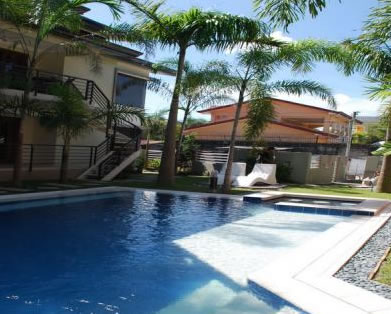
Property Type: Condo
Luxurious apartments, Philippines, this luxury development comprises of 12 units, all finished and ready to move in.
Property Terms: For Sale


|
Let your friends and colleagues know about this property.
|


Residential, Office and Business Developments
Some mixed-use projects combine housing with offices or other business space. These developments are often located around major employment centres, transport hubs and central business districts.
The combination can support demand from people who value proximity to employment and services. It can also create a broader commercial environment within the development itself.
However, residential and office markets respond to different economic conditions. An apartment buyer should not assume that strong office demand automatically means strong residential demand, or that the presence of offices guarantees a particular level of activity around the property.
The Asia-Pacific commercial property market provides the wider context for understanding office, retail and other commercial components within a mixed-use development.
Mixed-Use Developments With Hotels and Hospitality
Hotels and serviced accommodation are frequently incorporated into larger mixed-use projects, particularly in major cities and tourism destinations. A development may contain hotel rooms, serviced residences, private apartments, retail, restaurants and leisure facilities.
This structure can create an active environment for both residents and visitors, but it also introduces a distinction between residential ownership and hospitality operations. The hotel may be operated under a separate management agreement, while residential units may have their own ownership and management arrangements.
An international buyer should establish which part of the development is being purchased and whether the property is legally and operationally separate from the hotel or other hospitality components.
Mixed-Use Property in Major Cities
Large Asian cities provide some of the clearest examples of mixed-use development. High population density, limited land and extensive public transport networks can support developments where residential, office, retail and leisure activities are concentrated around important urban locations.
Transport access can be particularly significant. A mixed-use development connected to rail, metro or major road infrastructure can have a different market position from one that depends heavily on private vehicles.
International buyers should examine the development in relation to the wider city rather than treating the project's internal facilities as the complete location. Employment centres, surrounding neighbourhoods, transport, schools, healthcare and established commercial areas can all influence long-term demand.
Mixed-Use Property in Emerging Urban Areas
Mixed-use development is not limited to established city centres. Expanding metropolitan areas may use mixed-use projects to create new commercial and residential districts around transport routes, employment centres or major infrastructure projects.
These developments can provide new housing and services in areas where the existing urban structure is relatively limited. Their long-term performance can, however, depend more heavily on the successful delivery of surrounding infrastructure and the arrival of residents, businesses and services.
An international buyer should distinguish between facilities that are already operating and those that remain part of a future development programme. Proposed infrastructure can influence the potential of a location, but it should not be treated as equivalent to infrastructure that already exists.
Mixed-Use Property in Resort and Tourism Markets
Tourism destinations can use mixed-use developments to combine accommodation, residential property, retail, restaurants, entertainment and leisure facilities. The residential component may include apartments, villas or branded residences alongside hotels and resort facilities.
The underlying tourism market is therefore important. Visitor demand, seasonality, airport access, local services and competing accommodation can influence the commercial elements of the development as well as the appeal of the residential property.
International buyers considering this type of property should compare the development with the wider Asia-Pacific resort property market rather than assessing the residential units in isolation.
Buying a Residential Property Within a Mixed-Use Development
For a private international buyer, the residential component may be the most accessible part of a mixed-use project. Apartments and other residential units can provide access to a location with shops, restaurants, offices and other services close by.
Before purchasing, however, the buyer should establish exactly what is included in the residential ownership. Common areas, parking, storage, recreational facilities and other shared elements may be governed by separate management arrangements.
Service charges can also be influenced by the scale and complexity of the development. A project with extensive facilities, security, landscaping, pools or shared infrastructure may have substantially different ongoing costs from a conventional residential building.
The Asia-Pacific apartment property guide provides the residential property context for assessing individual units within mixed-use developments.
Foreign Ownership and Mixed-Use Property
Foreign ownership rules can become more complicated when a development contains several property categories. A jurisdiction may apply different rules to residential units, commercial premises, land and other forms of ownership.
An international buyer should therefore identify the exact property interest being acquired rather than relying on a general statement that foreigners can purchase property in the country. The ownership of the individual unit, the underlying land and common areas should all be understood.
In some markets, foreign buyers may have access to particular residential property while commercial or land ownership is subject to different conditions. The relevant position can also depend on location, nationality, residency and the legal structure of the development.
IPD's Asia-Pacific foreign ownership research provides the regional starting point, but the rules applying to a specific development should be confirmed independently before purchase.
Management and Service Charges
Management is one of the most important differences between mixed-use and conventional residential property. The development may require separate management for residential areas, commercial premises, hotels, parking, landscaping, security and shared infrastructure.
The buyer should establish who is responsible for each part of the property and how costs are allocated. Service charges can influence both the affordability of ownership and the eventual rental or resale position.
Where several uses share facilities, buyers should also understand how decisions are made and whether residential owners have representation in the management structure. The practical relationship between different parts of the development can affect the experience of ownership over many years.
Mixed-Use Property as an Investment
Mixed-use property can provide several potential sources of demand, but the investment case should not be based simply on the number of uses within a development.
A residential unit depends on residential demand and comparable supply. Retail space requires appropriate footfall and tenant demand. Offices depend on employment and business activity, while hotels and serviced accommodation depend on visitor and corporate demand.
Each component should therefore be assessed separately before considering how the different uses interact. A successful retail environment does not automatically establish the rental value of an apartment, and strong residential demand does not guarantee that commercial space will perform equally well.
Where rental income is central to the purchase, the rental investment framework can help assess the residential component alongside the wider development.
Mixed-Use Development and Infrastructure
Infrastructure can be central to the success of a mixed-use development. Transport, roads, utilities, pedestrian connections and surrounding commercial activity can determine how effectively the different uses interact.
Major transport projects can create new development opportunities by improving access to previously less connected areas. At the same time, infrastructure can create constraints, construction disruption or changes in traffic and land use.
International buyers should investigate both existing infrastructure and the development pipeline around the property. The location should be considered as a functioning urban environment rather than simply as a collection of facilities within the development.
New and Off-Plan Mixed-Use Developments
Many mixed-use projects are marketed before construction is complete. This can give buyers access to new apartments, commercial premises and other property at an early stage, but it also means that some parts of the development may exist only as plans when the purchase is made.
The developer, planning position, construction programme, proposed facilities and surrounding infrastructure should therefore be investigated carefully. Buyers should establish which components are already approved and which remain dependent on future phases or decisions.
The Asia-Pacific off-plan property guide provides the wider framework for assessing purchases made before completion.
Mixed-Use Property Due Diligence
Due diligence on a mixed-use development needs to cover both the individual property and the wider scheme. Title, ownership, permitted use, planning, building condition and contractual rights remain fundamental, but the buyer should also understand management arrangements and the relationship between different property uses.
Where the development is new, research should extend to the developer, construction programme and surrounding development pipeline. Where it is established, the buyer can examine existing occupancy, tenant mix, service charges, building management and the performance of comparable properties.
The broader property due diligence process should be adapted to the specific type of property being acquired.
Mixed-Use Property and the Surrounding Market
A mixed-use development should never be assessed entirely from within its own boundaries. The surrounding district determines whether the development has access to the population, employment, tourism, transport and services required to support its different components.
A large project can create a new centre of activity, but its long-term position depends on how successfully it connects with the wider city or region. Existing neighbourhoods, competing centres, future developments and changes in infrastructure can all influence the market.
This is why geographical research should precede detailed comparison of individual mixed-use properties. Understanding the location provides a framework for interpreting the development rather than allowing the development's marketing material to define the location.
Researching Mixed-Use Property Across Asia-Pacific
International buyers should begin with the country and location, then establish what type of mixed-use development is being considered. The next stage is to separate the development into its individual components and identify the demand supporting each one.
For a residential purchase, research should cover the apartment or house, ownership structure, service charges, management, rental demand and resale market. For a commercial purchase, leases, tenants, permitted uses, operating costs and commercial demand become more important. A hospitality component requires a separate assessment of tourism, operations and management.
The development itself should then be examined through planning, construction, infrastructure, ownership and management. Where the project is new or off-plan, the developer and delivery programme become particularly important.
Mixed-use property can provide access to some of the most connected and intensively developed locations across Asia-Pacific, from major metropolitan centres to emerging urban districts and tourism destinations. Its complexity is also its defining characteristic. The most useful research approach is to understand the location first, separate the development into its different property markets, and then assess the individual property within that wider structure.
Asia Pacific Property Market Snapshot
| Population | More than 4 billion people live across the broader Asia Pacific region, encompassing East Asia, Southeast Asia, South Asia, Australia, New Zealand and the Pacific island states. The precise geographical definition of Asia Pacific varies between organisations and sources |
|---|---|
| Area | Asia Pacific covers an extensive area stretching from South Asia and the Indian Ocean through East and Southeast Asia to Australia, New Zealand and the Pacific islands. Because regional definitions differ, the total area varies considerably between sources |
| Major Airports | Major international gateways include Singapore Changi, Hong Kong International, Tokyo Haneda and Narita, Seoul Incheon, Bangkok Suvarnabhumi, Kuala Lumpur International, Sydney, Melbourne, Auckland, Beijing Capital and Daxing, Shanghai Pudong, Delhi, Mumbai, Jakarta, Manila, Brisbane, Perth and major airports serving other regional centres |
| Currencies | Asia Pacific uses a wide range of national currencies. Major currencies include the Chinese yuan, Japanese yen, South Korean won, Singapore dollar, Australian dollar, New Zealand dollar, Indian rupee, Indonesian rupiah, Thai baht, Malaysian ringgit, Philippine peso and Vietnamese dong. Currency conditions, exchange-rate arrangements and restrictions on moving funds vary substantially between countries |
| Foreign Ownership | Foreign property ownership varies substantially across Asia Pacific and can differ according to nationality, property type, location, residency status and the structure of the purchase. Some markets provide relatively open access to residential or investment property, while others restrict foreign ownership of land or impose limits on apartments, houses, development land or agricultural property. International buyers should obtain independent local legal advice before purchasing |
| Major Property Markets | Major international property markets include Australia, Japan, Singapore, Hong Kong, China, South Korea, India, Thailand, Malaysia, Indonesia, Vietnam, the Philippines and New Zealand. Sydney, Melbourne, Brisbane, Tokyo, Osaka, Singapore, Hong Kong, Seoul, Bangkok, Kuala Lumpur, Jakarta, Bali, Manila, Ho Chi Minh City, Hanoi, Mumbai and Delhi are among the region's significant urban and investment markets |
| Main Overseas Buyers | International demand comes from a diverse mix of investors, expatriates, entrepreneurs, high-net-worth individuals, retirees, second-home buyers, lifestyle purchasers and people seeking residential property connected with employment, education or relocation. Important sources of overseas demand include neighbouring Asian countries, the Middle East, Europe, North America and Australia and New Zealand, together with substantial intra-regional investment |
| Tourism | Tourism is an important driver of property demand across much of Asia Pacific. Major tourism markets include Thailand, Indonesia, Japan, Australia, New Zealand, Vietnam, Malaysia, the Philippines and the Pacific islands. Beach resorts, tropical islands, cultural destinations, ski areas, major cities, cruise facilities and luxury hospitality developments support demand for hotels, serviced residences, vacation homes, branded residences and short-term rental property |
| Main Luxury Markets | Luxury property markets include Singapore, Hong Kong, Tokyo, Osaka, Sydney, Melbourne, Auckland, Seoul, Bangkok, Phuket, Bali, Jakarta, Kuala Lumpur, Mumbai and selected resort and island destinations across Thailand, Indonesia, Australia, New Zealand and the Pacific. Prime districts, waterfront locations, resort communities, branded residences and high-end new developments form important segments of the regional luxury market |
| Residency Routes | A number of Asia Pacific countries offer residence or migration routes connected with investment, employment, entrepreneurship, retirement, family circumstances or other qualifying criteria. Property ownership may support relocation or investment objectives in some markets, but buying property does not automatically provide residency. Eligibility, investment thresholds and programme conditions vary by country and can change over time |
| Property Taxes | Property taxes, stamp duty, transfer taxes, registration charges, land taxes, municipal charges, rental taxation, capital gains treatment and taxes affecting foreign buyers vary considerably across Asia Pacific. Some markets apply additional transaction taxes or surcharges to foreign purchasers, while others have different rules depending on property type and residency status. Buyers should assess acquisition, ownership, rental and disposal costs before purchasing |
| Investment Opportunities | Asia Pacific offers opportunities across apartments, houses, villas, luxury residences, beachfront property, resort developments, commercial real estate, hospitality, development land, new-build and off-plan projects. Major investment themes include established city markets in Australia, Japan, Singapore and South Korea; rapidly developing markets in Southeast Asia; major Indian cities; tourism destinations such as Thailand, Bali and the Pacific islands; and residential and lifestyle markets across Australia and New Zealand. Pricing, rental demand, infrastructure, taxation, regulation and foreign-buyer access vary considerably between countries and individual locations |
Major Asia Pacific Countries That Appeal to International Investors and Buyers:
Southeast Asia
 Cambodia Properties Growing urban and coastal markets attracting international buyers and investors.  Indonesia Properties Bali, Jakarta and other destinations offer apartments, villas and tourism-linked property opportunities.  Malaysia Properties Kuala Lumpur, Penang and other established markets attract international buyers and investors.  Philippines Properties Manila, Cebu and resort destinations offer apartments, condos and lifestyle property.  Singapore Properties A major international real estate centre with prime residential and investment markets.  Thailand Properties Bangkok, Phuket, Pattaya and other destinations attract substantial international property interest.  Vietnam Properties Major cities and coastal destinations offer growing opportunities for overseas buyers. East Asia
 China Properties Major metropolitan and coastal property markets with significant international connections.  Japan Properties Tokyo, Osaka, Kyoto and resort markets attract international residential investors.  South Korea Properties Seoul, Busan and other major markets offer urban and lifestyle property opportunities.  Taiwan Properties Taipei and other established markets offer apartments and residential investment opportunities. South Asia
 India Properties Mumbai, Delhi, Goa and other major markets attract overseas buyers and investors.  Maldives Properties Luxury resorts, islands and beachfront property create a distinctive international market.  Sri Lanka Properties Coastal, resort and city properties attract overseas buyers seeking lifestyle opportunities. Oceania & Pacific
 Australia Properties Sydney, Melbourne, Brisbane and major coastal markets have a long-established international profile.  Fiji Properties Beachfront and resort property provide a focused international lifestyle market.  New Zealand Properties Auckland, Wellington and lifestyle markets attract overseas buyers within regulated ownership rules. Territories
 Hong Kong Properties International property market and financial centre with a highly developed urban real estate sector. Territory.  Macau Properties Highly developed urban and resort property market with strong international connections. Territory. |
|

